Friday, March 3, 2023

Learning about the CCR and Getting Ready to Film

CCR

Today in class, we learned about the creative critical reflection (CCR). At first I thought that we would just be writing out our answers to a couple of questions in an essay, but our teacher had told us that we have to include two different media projects. This seems a lot harder than I had previously thought, but I think it will be a lot of fun. I think what I will probably do is create a director's commentary and a video of me talking about the project with inclusions of lots of images and excepts from my film opening. I still have the choice of doing many other media types such as a presentation with a voiceover, a talk show, an enhanced podcast, and many other projects. To make sure that I can complete the CCR projects, I will be working on it through the end of week six to the end of the project until I have to submit in week eight. Although this may be a lot more work than just an essay, this will be a lot more fun, and I'll be able to express myself and explain the process of my videomaking. 

Getting Ready to Film

I have decided that I will be filming my shots of me on my bike and at the bike park tomorrow. I have figured out who will play the role of the friend. My friend Sean, who's a good mountain biker and runner, will play the "Friend" in my film. I think I will be completing all of the shots from when I open my garage door to when I crash. I will most likely finish all the rest of the shots except for the green screen shot of me on the bike (since I don't have the green screen yet) tomorrow or on Sunday. 

First of all, I wanted to create the costume design for my character. I will be wearing a school spirit cross country hoodie with some shorts. The cross country hoodie will further explain that the character is a good runner and is on a team for his school. The reason for wearing this is so that it can just give more background information for the audience, as they will know that he does cross country, which is a running sport. This will imply that the character does running, adding onto the scenes of the medals. The character will also be wearing normal shorts to fit the casual style of the character. The character will be wearing short since the film is located in Florida and it's hot. The friend will be wearing a normal t-shirt with some shorts to also give a casual feel of a teenager. 

Kiran hoodie on left (picture taken by me), Friend shirt on right (link to image)

The filming location will be Markham Park in Weston, FL. I will be biking from my house to the bike park, which is around 4 miles away. This will be where I get all of the shots of me biking to the bike park. I've been biking here before, so I know where a big drop is, so that I can film the crashing scene properly. I also know where there are some nice features, so they will make for some entertaining and cool additions to my film. The reason I am filming at this location is because there are no other mountain biking locations in my area, and this one is so close that I can bike to it. Markham Park is just a convenient location to film at, which is why I will be filming there.
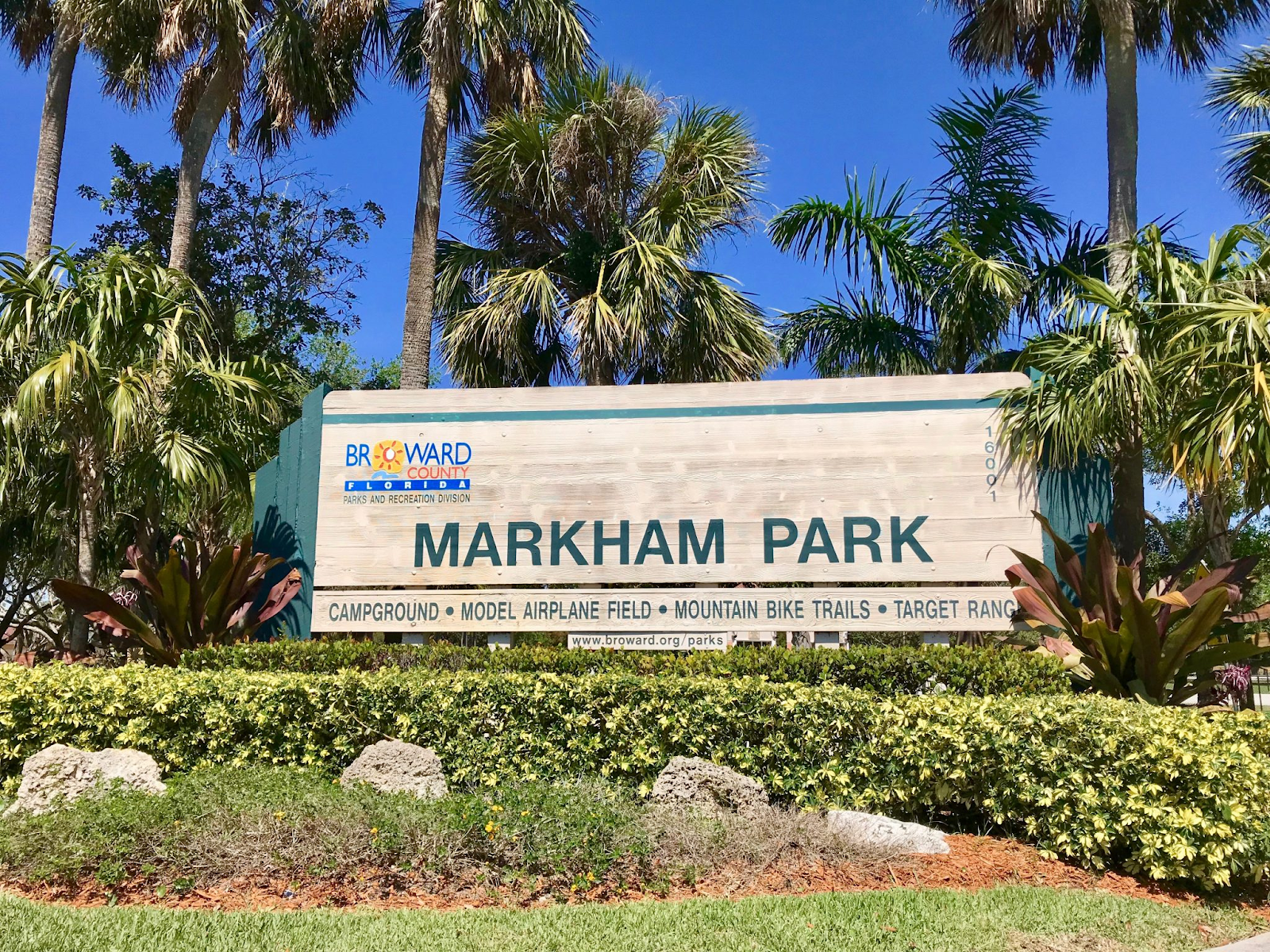
Image of Markham Park (link to image)

The camera that I will be using for the garage opening and me leaving my house is the camera from my phone, which is a Motorola moto g(7). Although the phone model is somewhat new, my camera quality is not the greatest for capturing moving shots, which is essential when going mountain biking. To have stable footage while I'm riding my bike, I will have to ask my friend for his GoPro. I will need to ask him for what model it is. To attach this onto my body to make a nice smooth camera movement, I will also tell him to bring his camera strap. This camera will probably be used for the filming of all the shots that include camera movement, since GoPros are very good at capturing this kind of movement, especially in the bumpy and rocky trails of Markham Park. I will have to alternate between using the GoPro with the strap and my phone for movement and still shots. This will mean that I will have to take off or put on the GoPro with the strap each time that I want to switch between each type of shot. This may be a hinderance and make the process take longer.

Well, hopefully I can finish filming quickly tomorrow, since when it starts to get dark, the mosquitos start coming out. I will probably start filming at 4:00 PM tomorrow as it will be a good time for me and my friend, and I will have plenty of daylight to finish filming. Well, until next time. See ya!

Resources

Monday, February 27, 2023

Group Meeting in Class and Teacher Meeting

Today in class, I had a meeting with other group members from other groups. We all presented our ideas to each other and gave each other feedback. I wanted to have feedback on what I could do better on the plot of my film. The people I talked to said that I had a pretty good plot, but I could make the ending better. One idea that my classmates gave me was that right after the main character crashes his bike and cuts to the title screen with the big crash sound effect playing, I could slowly introduce a muffled beeping sound and have a ringing sound effect that plays usually after someone gets hit by a flash grenade. This could then transition into the sound of the unmuffled beeping of the heart rate monitor and the character could open his eyes as his ears stop ringing. This could also be paired with a blurred effect right as he wakes up. I thought these were some good ideas that I could implement. I could have the heartrate monitor muffled as a sort of sound bridge to introduce the new location.

Another idea that my classmates had was that I could use a graphic match right after the title screen and before the hospital scene. Here's how it would go. Right after the crash and the title screen, the friend character could be shaking the main character in a POV shot from the main character. The friend would be covering the light of the sun making a nice lighting effect. Then, the friend could move out of the way of the sun, creating a big beam of overexposed light. This could then transition into the light of the hospital room. This would be a nice transition with a graphic match to get from the crash to the hospital room.  

Next, my teacher, Mrs. Stoklosa, called me up to talk to me. She was concerned about my physical wellbeing, since I wanted to do a realistic looking bike crash. She asked me about how I was going to make the film so that I wouldn't kill myself in the process. I told her that I would use a rotoscoping shot of me in the air with my bike tilting forwards, then use a POV shot of me getting closer to the floor, and then a close up of my head almost colliding with the floor, and then cut to the title screen and just have a loud crash sound. My teacher told me that editing would be my best friend and this was good. However, she told me that one thing was incorrect. Rotoscoping is a method of animation, and not a method of putting an object in a film on a different background. This was a thing that I had mistaken when I was researching. When I was doing some research, I saw videos on animation rotoscoping and I also saw videos that were taking objects and putting them on different backgrounds. This was also titled as rotoscoping, so I got confused. 


Rotoscoping (left) vs. Green Screening (right)

After she clarified my misinformed thoughts, she asked me how I would create this shot. I then told her that I could create a cool effect of the bike rotating in the air by using a green screen and just editing the rotation of the bike in Premiere. She said that this would work and would be better than rotoscoping, since if I used rotoscoping in this shot, one shot would be animated and the rest would be just regular film (not good). Thankfully, Mrs. Stoklosa helped me out with this misconception. I can now start researching on the right term, which is green screening. I already know how to green screen as I've used it in previous school projects, but it would be better if I could do some further research later when I am in the process of editing. 

I thought this was a funny experience since my teacher was actually concerned for my wellbeing, and at first it looked like she wanted me to reconsider my idea. However, she let me go with this idea after I explained the editing that I would use to create this bike crash. I really want to go through with this idea as it would teach me a lot of editing, and I would get to implement a cool effect.

This day was important as it corrected my misconceptions, and it was a day to get important feedback from my peers. It really helped me understand how I would create my project and make it better. I think next time I blog, it will be about filming. Well, until next time. See ya!

Resources:

Sunday, February 26, 2023

Creating my storyboard

My goal for today was to create my storyboard. I got my pencil and papers and started drawing out my ideas for each important shot. I wanted to show all of the story and important shots, so I only took some of the most significant shots from the shots list and the script. I tried to draw bicycles, but I don't really know how to. I tried my best though. Here's my storyboard:

The storyboard shows the basic plot of my film opening, starting off with the pan right medium and close up shots of medals. These shots would include some of the opening credits in a subtle white text. Then it shows the main character in a close up talking on the phone to his friend, who is reminding him about the mountain biking trip they had planned. Kiran then will leave in a medium shot to his garage. We will see the close up of Kiran pressing the button to the garage door, and then a long shot from outside his house showing the garage door open. Then there will be various shots showing him go to Markham Park: POV, tracking, long shot, extreme long shot. Afterwards, we will see the close up of a danger sign. Then, Kiran will meet his friend in an OTS shot. Then, they will start biking in medium and long shots. We will see another close up of a double red diamond sign. Then, the crash will happen in a long shot of him falling, a POV shot of him getting closer to the floor, and a close up of him colliding with the floor. Finally we will see the title screen (Big white text on black background "Back On Track") followed by a close up of Kiran in the hospital.

In the storyboard, there were multiple things that I wanted to emphasize to make sure that the audience understood the certain plotlines of the film opening right off the bat. First of all, I wanted to make sure the audience understood that the main character (me), was a high school track star. Using inspiration from the film opening from The Wrestler where the camera moved right over a bunch of the main characters accomplishments, I did a similar thing with the camera panning right over lots of medals and trophies. While one might think this is too ambitious to accomplish, I actually have lots of medals from personal races, some trophies from various different races, and my dad has a ton of medals and plaques that I could use to get these shots from. I also have a certificate that I drew in the 4th shot of the storyboard. This certificate will be used to introduce the character's name as well as show that he had a good track season in the previous year. 

Another thing that I wanted to emphasize with the specific type of shot was that I wanted to foreshadow the crash that would happen in the end of the film opening. I did this by showing close up shots of the DANGER sign and the double red diamond sign. I think I will make these two shots zoom in shots as well to further signify the importance of these signs to show that beginner bikers should not be doing dangerous things like Kiran in the film opening would do. This also shows an important theme that the rules are there to be followed, not to be disregarded.

One other type of shot that I utilized to show something was the long shots. All of the long shots used were there to introduce the area that the character lived in. I also used these long shots so that I could put some of the credits into these shots as it won't take too much focus off of the character, and it would be a good time to input the credits. There won't be too much action in these long shots and the camera would most likely be still, so putting the credits here will be beneficial, as putting the credits in the scenes where there is actions going on will distract the viewers.

The storyboard will be helpful as it shows the kind of shots that I want, and it visualizes each shot, so that when I go to film, the shots will already be planned out, and I will only need to shoot the shots in accordance to the storyboard. It will also make the filming process faster as the ideas are already drawn out, I will just have to film. 

I think that's enough writing for today, though. I now need to film the project. Well, until next time. See ya!

Saturday, February 25, 2023

Creating my film's script

Today, I wanted to complete my script. To accomplish this, I opened up Celtx, which is a scriptwriting and pre-production tool to help create scripts.

The first thing that I was faced with when tackling my script was the title of the film. This topic still lingered on my mind since my last blog, since it is a big part of the film, as it will capture the essence of the entire movie. The movie will be about the now disabled character trying to find his way to back to where he was. Some of the movie titles that I was thinking about were Broken, Track Star, or Back on Track. I think I will most likely go with Back on Track, but I will continue to ponder upon some titles.

I based off my script on my shots list that I created a few days ago. There were some things that I needed to change. I had to change the name of "Character" and "character's friend" to make sense in the script. I changed these to "KIRAN" and "FRIEND," respectively. I didn't know who to cast as the friend in my film yet, so I had to just put friend in there. 

A section of my shots list.

A section of my newly made script

As you can see, there's lots of difference as I've added new dialogue and changed the names of the characters.

Why would I show you guys a section of the script when you could see the entire script. Here's the actual document that I uploaded onto Google Docs (LINK HERE). If you don't want to open that up, its fine. I'll show you here.

So this is my script. Making a script will be extremely helpful in the production part of this film as it will help me visualize the different sections of the filming process. I now have all the locations set and all the actions planned out. Even if I need to add or remove things, it will be easy to do so. Using a script during the production and filming process will rapidly speed things up as it will help me to set up each action quickly, and it will make the filming process faster in general by giving me the basic overlook on the shots. Even if I don't know what shots to use, I can go look back on my shots list. The script will help my actors understand what they need to do as their roles are capitalized and can be seen easily. Even if they have no prior knowledge of the film, I can just show them the script and they will know their roles. 

I still need to get a fixed title as well as find two actors who will be willing to help. The pedestrian won't have a big role and will take probably 10 minutes maximum to film. But the friend will have a significant role, so I will need to plan with someone ahead of time. Well, until next time. See you!

Tuesday, February 21, 2023

Establishing my shots list

Now that I had all my research done, I can finally create my shots list. I opened up Google Docs and started writing down my thoughts from the previous days into my shots list. I wanted to include what type of shot, what action is being done, and what kind of audio is playing in each shot. I also talked about how some shots foreshadowed upcoming events in the film. Well, here's my shots list:

While creating my shots list, there were some problems that I have not thought about that I need to tackle soon. I have not thought about what people I will cast as the role of the main character, the friend, and the pedestrian. However, I have some ideas of what I will do. I think that I will probably be the main character, and I will ask one of my friends named Sean to cast as the role of the friend. He is good at mountain biking so he won't get hurt in the making of the film. 

However, one of the main concerns I have about the film is that I will get hurt. Not by making a mistake in mountain biking, but by having to fall off my bike in the film. To make a realistic crashing scene, I will inevitably have to jump off my bike or do something that will make the film look believable. I'm thinking that I could just make it with some close ups of the bike falling and then just using a POV shot of the camera falling towards the floor. But that would be lame. I want to create the effect of the bike rotating in the air and then the guy hitting his head on the floor. I could probably do this with rotoscoping. All I need is a green screen or a single colored wall. 

I also need to finalize the title of the film and the font that I will use for the film credits and the title. I also need to create a film production company and to create the logo for that company. This might be a problem as I will need to look into examples of production cards.

Creating the shots list will help the overall process of making the film because it will give me the shots I need when I'm filming. It will give me an outline of the plot as well as giving me a structure and plan during the production of the film. If I did not create a shots list, I would just be going improv when I am filming the project. This would not turn out good. Therefore, a shots list is necessary. It has also provided me with extra thought of the problems addressed above. Without creating the shots list, I would not have thought about these problems that I will now try to fix. The shots list also provides me with a sort of schedule. Since I have to film in different locations, I will have to plan out for different days of filming. For example, I would need to film one day for all the shots in my house and another day for all the shots in the bike park. Therefore, this shots list is essential to the structure, planning, and schedule of my filming process. Now that I have a shots list, I will be able to create a storyboard with the most important shots in it. I will also be able to choose the most important shots because I know what all the shots will be in my film. Finally, creating the shots list this early will provide as a guideline, and not a plan that's fixed in stone. I will be able to change it if I need to make the film longer or shorter. 

Anyways, I will now need to create a storyboard, which is what I'll probably do in my next blog post. Until next time. See ya!

Monday, February 20, 2023

Representation of the Disabled in Media

Since I created the plot of my project yesterday and it included a disabled person, I thought that today I would do some research on disabled people and their representation in media. 

Representation of Disabled People 

There are different stereotypes of disabled people in medias. These stereotypes can be positive or demeaning, but in either scenario, they are usually never accurate to reality. Nowadays, more realistic characters with disabilities are being represented in the media; however, stereotypes are very much still present. Most actors who play the role of a disabled person are not actually disabled. This can create a false association with people who are healthy and disabled people. This can also create a false representation of a disabled person as the actor isn't actually disabled. One film and book that had represented a disabled character was called Wonder. The story is about a boy named Auggie who has a craniofacial disorder. The book was written before the movie and was beautifully written and beloved by many. Lots of people with similar disabilities found that this was a book that they could really relate to, so they loved it. However, when the movie came out, people were not as happy with the representation of Auggie in the film. The boy who played as Auggie was not actually disfigured. The actor only appeared as a disfigured person, instead of casting a person who actually is disfigured. 

On the left is the actor for Auggie (Jacob Tremblay) and on the right is how he was given prosthetic makeup to make him seem disabled.

Also some people thought that Auggie's face was made not as disfigured to make it visually softer on the audience to make them think that this disfiguration of the face isn't as bad as it seems.

Now back to talking about stereotypes. There are certain stereotypes that involved disabled people. The main three stereotypes include the hero, the villain, and the victim.

The Hero

The hero stereotype is all about how the character with a disability tries to overcome the mental or physical disability. One example of this could just be about how the can change their behavior and characteristics to defeat their disability or learn to work with it to fit in more with society. An extreme example of the "hero" stereotype is literally being a superhero. One of the most notable hero with a disability is Daredevil, who is blind. 

The poster for Daredevil clearly showing that something is wrong with his eyes.

But his blindness only enhances his other senses. Although this stereotype is in a positive light about disabled people, there are a few problems that could occur while using this point of view of a disability. Films that use this stereotype are about how the character learns to deal with the disability and not how their everyday life goes. This can discourage many people as the details about the struggles the characters portrayed in this stereotype are often mitigated or not shown. It also portrays disabilities as just a "problem" or a "hurdle" that a person should overcome to fit into society. If one cannot overcome a disability, this can make people upset or discouraged. Furthermore, the hero stereotype is almost usually acted by people who aren't disabled, showing a false image of disabled people.

The Villain

Physical disabilities have often been attributed to evil or sinister characteristics. In recent years, characters with disability have been shown to be driven to evil, vengeance, or violence due to their hate of their disability. Not only physical disability, but also mental disability can contribute to the violence of a character. Mental illness has been correlated to crime and violence in many films, even though many people with mental illness tend to be the kindest and most innocent people in reality. Furthermore, most times people with disabilities actually are the victim of violence, not the other way around. This shows that this stereotype is usually false and tends to show disabled people in a negative light. One of the examples of a villain with a mental disability is The Joker from the movie The Dark Knight. 

The character shown above is The Joker from The Dark Knight

In the film, The Joker is shown as a schizophrenic, and not only is his mental disability contributing to his series of crime and violence, but it also makes him cruel. Another example of a villain with a disability is in Captain America: The First Avenger. The villain of the film, Red Skull, is represented with having a disfigured and red face. 

Red Skull is shown in the image above. 

Red Skull was a character who had gotten his face disfigured, showing disabled people in a negative light. Although making him have a physical disability is a way to make the villain more scary and creepy, which gives him a better role as a villain, this does give a bad example to people with actual disabilities. The actor, Hugo Weaving, is also not an actually disabled person, which gives another false representation of a disabled character. A problem that casting a disabled person as a villain can create the negative outlook for disabled people by giving them a bad example and showing them that if they cannot live a normal life, they should not let anyone else do so either.

The Victim

This stereotype of the victim is the most common type of disabled character, who is depicted as a helpless and miserable creature that people should pity. In other times, the disability can be used to gain sympathy from a viewer. This can be seen in The Hunchback of Notre Dame. 

This is Quasimodo, the main character of the film
Quasimodo, is born with kyphosis, has a large wart on his eye, and slowly becomes deaf as he works in a clock tower. Although he has all these disabilities and can be seen as miserable, he also gains the support and sympathy from the audience watching this film.

The victim stereotype can also be used to give comedy to a film by using the disabilities of characters to create funny scenarios. One example of using an intellectually challenged character is in Forrest Gump, since the main character is often slow in situations, it can create humorous situations.

Forrest Gump is a character with a intellectual problem as he tries to live his life.

Final Thoughts

This research will help me figure out how to create a good tone of the film as this research will serve as a basis of the disabled main character. This research has shown me the different stereotypes of disabled people in films and can help me decide what I want my character to be in my film after his accident. It also helped me see how the representation of disabled people in today's media is not very accurate or fitting of actual disabled people. Although I know I will most likely not be able to use a disabled actor, I will try my best to make sure I can properly represent this underrepresented group properly. Well, until next time! See you later.

Resources:

Sunday, February 19, 2023

Thinking about the plot

Now that I've done my research about various genres and have chosen something to do with the sports drama genre, I can now decide what kind of plot I want to do. I wanted to do something that I could somewhat relate to. As a varsity cross country and track runner, I've always been scared of being injured, since if I get injured, I won't be able to run for a long time, and I would lose lots of progress. With this said, I wanted to create a film that exposed and made this fear come to life, not to scare me, but to embrace what could be in an alternate reality. 

Plot

A plot that I've been thinking about is about a high school track star who's won many races for his team. He is widely accomplished. The basic plot of the film would be about him getting into an accident where he gets physically impaired and then trying to get back to where he previously was in his physical and mental state. 

I'm thinking that the film would start with some shots of his medals and trophies to introduce a the character's accomplishments. These medals and trophies would give more background about the character. This would take inspiration from "The Wrestler" as I have researched in my previous blog post, where the camera scrolled past lots of magazines of a man's accomplishments. 

A shot from the movie "The Wrestler" (shows the magazines across the entire shot)

This would be similar to my shot because instead of scrolling past magazines, it would be looking at medals. This would be cross-cutting between him on a phone call with his friend, who is convincing him to go mountain biking. The track star has never been mountain biking before, so he is hesitant. But he eventually goes with him. The credits would play in a subtle way like in "Ali" where it would be off in the side and in a subtle white text. 

A shot from the movie "Ali" (showing the subtle yet noticeable credits)

Next, there would be more credits as the main character bikes over to the mountain biking park. This scene would have music play over it and have a series of long shots. This would establish his setting as in more of a wealthier neighborhood.

After a little bit of riding in the bike park, he would have a terrible crash with the music leading up to this point and stopping as he collides with the floor. I'm thinking of either using rotoscoping to make a cool effect with the crash or just cutting right before the character hits the floor so we won't actually have to hit the floor from a bike crash.

Right after the crash and the climax of the song, there would be either silence or the sound of the bike wheel continuing to spin. This would be accompanied by a black screen with a big font for the title. I'm still deciding what the title will be. It would be something similar to a synonym to broken. Or maybe it could be "Back on Track" as this can be seen in two ways: the main character getting back onto the running track or the main character getting back to where he was (getting back on track).

The film opening would end with the main character in the hospital. This is probably my biggest concern as I don't have access to any hospitals. However, I could probably get away with just a close up shot of the character's face and a heart rate monitor beeping in the background. I still need to decide how the character will be impaired. Will he hit his head and become mentally ill? Will he become blind? Will he break his legs? I'm thinking that he should still be able to run, but give him an impairment that will give his life a difficult time in doing everything. This will make the plot more interesting.

Thoughts


Knowing the plot of my film this early on in the process of creating the film will help me because it will give me enough time to make revisions to it or change anything I don't like. 

Now that I know that I will have a disabled person in my film, I will need to research the representation of this group of people in media. I already know that disabled people are one of the least properly represented groups in media, but I will need to research how they are represented so I can properly understand how to make a film on this group of people. If I didn't do this research, I would not know how to properly represent this group and create a film that isn't great as it isn't even accurate to reality.


Resources

Creative Critical Reflection

Well guys. This is it. This is the end of the road: my CCRs. I really would like to thank you for taking the time to read all of these blogs...